
Abstract
Purpose:
The aim of this study was to describe the surgical approach and outcomes of artificial endothelial layer (EndoArt) implantation in chronic corneal edema.
Methods:
Fifteen eyes of 15 patients with chronic corneal edema were implanted with an artificial endothelial keratoprosthesis (EndoArt, EyeYon Medical, Israel) several months (range: 2–108 months; mean: 42.7 ± 38.5 months) after at least one Descemet membrane endothelial keratoplasty failure or as a first-line procedure to improve anterior segment visibility ahead of a second procedure (phaco + Descemet membrane endothelial keratoplasty) in outpatient procedures. A 20% SF6–air mixture was used as a tamponade to secure the EndoArt in place. The number of transfixing sutures (1–4) was based on surgeon judgment and preference, considering patient-specific anatomical factors such as aphakia or previous graft configuration. The original technique used only 1 suture. Measured outcomes included changes in central corneal thickness, best corrected visual acuity (logMAR), rebubbling rate, and postoperative complications.
Results:
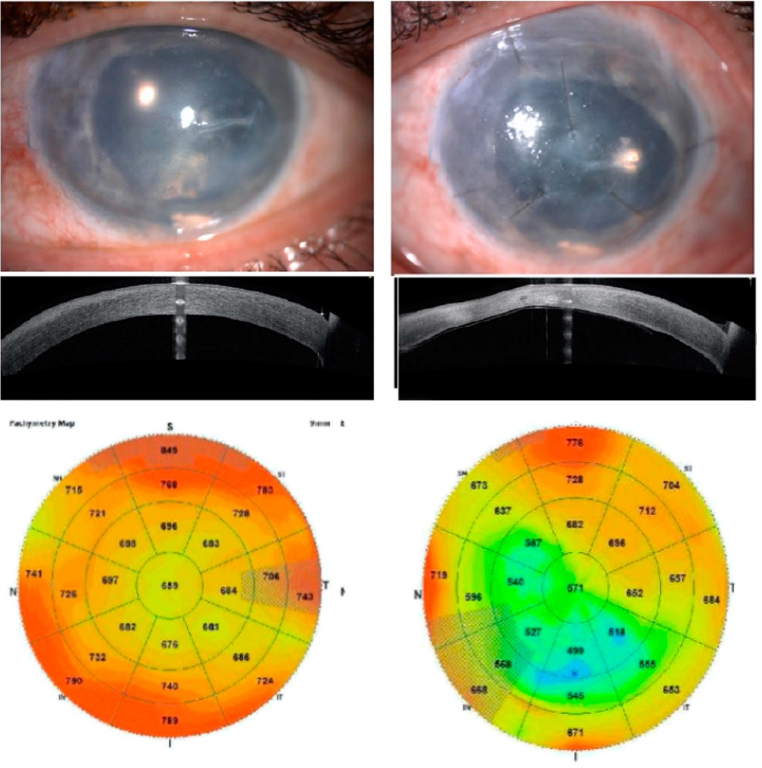
The preoperative mean central corneal thickness (844 ± 236 µm) decreased significantly postoperatively in all patients (607 μm ± 251 μm at the last visit (1 to 6 months), reduction of 28%, P-value <0.05). Ten eyes (66.7%) required at least 1 rebubbling. Three eyes required more than 2 rebubblings. Eighty percent of patients (12/15) were pseudophakic at the time of surgery.
The mean best corrected visual acuity improved significantly from 2.13 ± 0.19 logMAR preoperatively to 1.84 ± 0.53 logMAR at the final follow-up (P-value <0.05). Postoperative complications included intraocular pressure elevation (33%), partial implant detachment (66.7%), 1 intraoperative posterior dislocation, and 1 case of retinal detachment.
Conclusions:
EndoArt may represent a therapeutic option for chronic corneal edema in complex cases where conventional endothelial keratoplasty has failed or carries a high risk of failure. It improves visual acuity and significantly reduces corneal thickness within 3 to 6 months of surgery.
